

black framed bathroom mirror
Understanding Thread Ring Gauge 6H and 6G Importance and Applications in Precision Engineering In the realm of precision engineering, the thread ring gauge is an indispensable tool used to ensure the integrity and accuracy of threaded components. Among the various types of thread gauges, the 6H and 6G classifications stand out due to their specific applications and tolerances. This article explores the significance, characteristics, and applications of thread ring gauges, particularly focusing on the 6H and 6G standards. What are Thread Ring Gauges? Thread ring gauges are cylindrical tools used to check the external threads of fasteners such as bolts and screws. These gauges assess whether the dimensions and angles of the thread are within the permissible limits defined by industry standards. The gauges come in two primary types Go gauges, which should fit onto the threaded part, and No Go gauges, which should not fit. This binary checking method ensures that components meet the required specifications for quality and performance. The 6H and 6G Classifications Thread gauges are classified according to their tolerance grades. The 6H and 6G are specific designations within this classification system, mainly denoting the fit of internal and external threads. - 6H This classification refers to the tolerances for external threads. The H indicates that it is a metric thread gauge that is designed for a medium tolerance level. It is intended for use in applications where a good fit is required, typically allowing for easy assembly while maintaining sufficient strength. The 6H gauge will permit slight variations in thread depth, pitch diameter, and overall dimensions, thus accommodating minor manufacturing imperfections while ensuring proper functionality. - 6G On the other hand, the 6G designation applies to internal threads. This tolerance grade is typically used in situations necessitating a more rigid fit. The “G” categorization indicates a higher level of precision, making 6G gauges suitable for high-pressure and critical applications, such as hydraulic systems. A 6G thread will have tighter tolerances compared to 6H, ensuring that parts fit together securely under stress without the risk of loosening or failure. Importance in Precision Engineering The use of 6H and 6G thread ring gauges is crucial in industries such as aerospace, automotive, and industrial manufacturing where safety, reliability, and performance are paramount. The correct threading of components directly impacts the functionality and durability of mechanisms. In sectors that operate under stringent regulations and high-performance demands, such as aerospace, the adherence to exact threading standards becomes even more critical. thread ring gauge 6h and 6g During the manufacturing process, any deviation from the specified tolerances can lead to issues such as thread galling, stripping, or failure under load. Utilizing 6H and 6G gauges during quality control helps identify defects early, reducing the risk of costly recalls or failures in the field. Applications The applications of 6H and 6G thread ring gauges are vast 1. Aerospace In aviation, where components are often subjected to extreme conditions, ensuring precise fit of threaded connections is essential. The 6G gauge aids in assessing the internal threads of fasteners that hold critical parts together. 2. Automotive In the automotive industry, manufacturers utilize these gauges to ensure the correct fitting of engine components, suspension parts, and other critical assembly areas where safety and performance are interlinked. 3. Industrial Equipment Industrial machinery often relies on threaded components for assembly. Using 6H gauges ensures that external threads meet quality standards, enabling smooth operation of heavy machinery. 4. Manufacturing In general production environments, the application of stringent quality checks through 6H and 6G gauges is vital to maintaining high standards and preventing potential failures. Conclusion In summary, thread ring gauges, specifically the 6H and 6G classifications, play a pivotal role in ensuring the quality and reliability of threaded components across various industries. Their importance cannot be overstated, as they serve as the last line of defense against manufacturing defects that could lead to system failures. By adhering to these threading standards, engineers and manufacturers can guarantee that their products perform as intended, offering safety and reliability to end-users.
about
black framed bathroom mirror
The aerospace industry operates under stringent quality control standards to ensure the safety, reliability, and performance of aircraft components. Even the slightest deviation in part dimensions can lead to catastrophic failures, making precision measurement tools indispensable. Among these tools, snap ring gage , steel ring gauge , standard ring gauge , and gauge meant ring play pivotal roles in verifying the conformity of critical components. This article explores how these specialized instruments contribute to aerospace quality assurance, emphasizing their design, applications, and importance in maintaining industrial compliance. Precision Measurement with Snap Ring Gage in Aerospace Components A snap ring gage is a go/no-go gauge designed to measure the internal or external diameters of grooves, snap rings, and retaining rings. In aerospace manufacturing, these components secure bearings, shafts, and other rotating parts, ensuring they remain fixed under extreme operational stresses. The snap ring gage validates whether the groove dimensions fall within acceptable tolerances, preventing assembly errors that could compromise structural integrity. Aerospace applications demand gages with minimal thermal expansion and high wear resistance. Manufacturers often use hardened steel or carbide-tipped snap ring gage designs to withstand repetitive use in high-volume production environments. For instance, turbine engine assemblies require snap rings to hold blade assemblies in place, and a miscalibrated gage could result in improper seating, leading to engine failure. By integrating snap ring gage systems into automated inspection lines, aerospace suppliers achieve rapid, repeatable measurements while adhering to AS9100 quality management standards. Steel Ring Gauge: Durability for High-Stress Environments The steel ring gauge is a cornerstone of dimensional inspection in aerospace due to its robustness and longevity. Crafted from high-grade tool steel or stainless steel, these gages resist deformation, corrosion, and wear—critical traits for environments exposed to temperature fluctuations, hydraulic fluids, and mechanical stress. In landing gear manufacturing, for example, steel ring gauge tools verify the inner diameters of axle housings. These components must align perfectly with wheel bearings to avoid uneven load distribution during takeoff and landing. A steel ring gauge ensures that each housing meets precise specifications, reducing the risk of premature wear. Additionally, the magnetic properties of certain steel alloys allow for integration with automated sorting systems, streamlining quality control workflows in large-scale production facilities. Standard Ring Gauge: Ensuring Universal Compliance in Aerospace A standard ring gauge serves as a master reference for calibrating other measurement devices, such as micrometers and bore gauges. Traceable to national or international standards like NIST (National Institute of Standards and Technology), these gages guarantee that all inspection tools within a production line adhere to unified accuracy benchmarks. Aerospace manufacturers rely on standard ring gauge sets to maintain consistency across global supply chains. For instance, a turbine disk sourced from one supplier must seamlessly integrate with a shaft produced elsewhere. By calibrating inspection tools using a common standard ring gauge , companies eliminate dimensional discrepancies that could delay assembly or necessitate rework. Furthermore, regular audits using these gages help aerospace firms comply with FAA and EASA regulations, which mandate rigorous documentation of measurement traceability. FAQs About Gauge Meant Ring in Aerospace Applications What is the primary function of a gauge meant ring in quality control? A gauge meant ring is a specialized tool used to verify the dimensional accuracy of cylindrical parts, such as engine pistons or hydraulic cylinders. It ensures that components meet predefined tolerances before they are approved for assembly. How does a steel ring gauge differ from a carbide gauge? A steel ring gauge is typically more cost-effective and suitable for general-purpose inspections, while carbide gauges offer superior hardness for high-wear applications. Both are vital in aerospace, but material choice depends on the inspection frequency and environmental conditions. Can a standard ring gauge be used to calibrate a snap ring gage? Yes. Master standard ring gauge sets are often used to calibrate snap ring gage tools, ensuring their measurements remain traceable to international standards. Why is material choice critical for a gauge meant ring? Aerospace components operate in extreme conditions, so the gauge meant ring must resist thermal expansion, corrosion, and mechanical wear to maintain measurement accuracy over time. How often should a steel ring gauge be recalibrated? Recalibration intervals depend on usage frequency, but aerospace manufacturers typically recalibrate steel ring gauge tools every 6–12 months to comply with quality management protocols. In aerospace quality control, precision measurement tools like the snap ring gage , steel ring gauge , standard ring gauge , and gauge meant ring are non-negotiable for ensuring component reliability. These instruments enable manufacturers to uphold tolerances measured in microns, mitigate risks of in-flight failures, and meet rigorous regulatory demands. As aerospace systems grow more complex, the role of these gages will only expand, solidifying their status as indispensable assets in the pursuit of aviation excellence.
-

High quality industrial productsagement

High quality industrial products
View Details -

Meet the diverse needs of customers

Meet the diverse needs of customers
View Details -

Strict quality control

Strict quality control
View Details -

Top raw materials

Top raw materials
View Details -

Trusted supplier

Trusted supplier
View Details
Our application


news and information
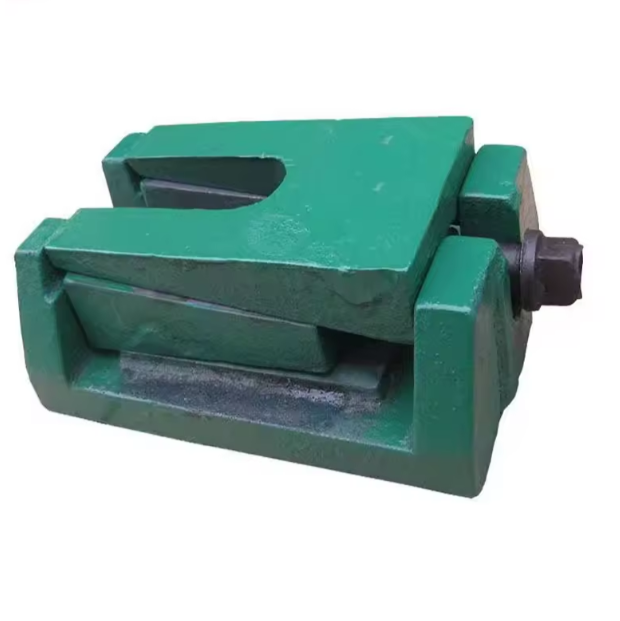
vibration pads
Understanding Vibration Pads A Comprehensive Guide In today’s fast-paced world, where machinery and

Welding Inspection Ruler for Accurate Joint Measurement and Quality Control
The Importance of Welding Inspection Rulers in Quality Control Welding is a critical process in nume
Y Type Strainer Filter for Efficient Fluid Filtration Solutions
Understanding Y-Type Strainer Filters A Comprehensive Guide In various industrial applications, main
 English